Friday, March 13, 2015

Powerless Point

I had one of those head-slap eureka experiences this week.  I could have been in a commercial for V8 or imitating Homer Simpson’s “D’oh.”   I read something and it dawned on me I was going about things in the wrong way.  In fact, I was spectacularly wrong, but I didn’t fully recognize the problem until the head-slap.

I had good intentions, and I even thought I was being helpful.  Unfortunately, you experienced my error because I did it to you!  I’m not sure exactly how to move forward.  I have some ideas of how to get better, but it will be a work in progress.

Let me illustrate my mistake:


This is a PowerPoint slide I used last September in a PD session.  If the research is correct, you probably do not remember the exact content of my presentation, but you probably do remember doing the Marshmallow Challenge during the session in which it was used.  Before going any further, think back and see if this is right.  Do you remember the topic of this PowerPoint presentation?  (Hint: It wasn’t UbD.) Now, do you remember the Marshmallow Challenge?


Typical PowerPoint Presentations

My head-slap moment came while reading an article in an EdSurge Newsletter entitled, “Why Your Students Forgot Everything on Your PowerPoint Slides.”  This incredibly long title also serves as a synopsis.  If the author, Mary Jo Madda, is right—and she cites lots of research to support her claims—I have not used the power of PowerPoints well.  In fact, my approach may have contributed to confusion rather than clarification.

Madda says our brains can only process a limited amount of information at any one time.  Like our computers, our brains have limited working memory.  In danger of mixing a metaphor, Madda says putting information in our brains is like filling a bucket with rocks.  The more complex the task and information, the more “rocks” are thrown into the bucket.  When our brains are overloaded, similar to a computer running out of working memory, everything slows down and pieces are lost completely.  Adding multiple modes of processing is like opening up another software program when the computer’s working memory is already maxed out.  It adds to the cognitive overload. 

That is what often happens with PowerPoint presentations.  Our students have difficulty reading, listening, taking notes, and processing information simultaneously.  Our mode of presentation can add stress to already strained working memory.  Madda writes about the Redundancy Effect: “The duplicate information—spoken and written—doesn’t reinforce one another; instead, the two effectively flood students’ ability to handle the information.”

I read that line and slapped my forehead.  I do this all the time.  I put up a slide full of words.  I know I shouldn’t read the text because that irritates me to no end when I am in the audience.  But I do talk about what’s in the text.  What this does, according to Madda, is put people in the audience in a difficult position.  They try to read the text, listen to me, and filter through the information to find key points all at the same time.  Our brains don’t work this way. 

If we are reading, we can’t listen fully.  If we are processing information, we can’t listen or read for comprehension.  If we are listening, we might “see” the words, but we won’t “understand” the content.  We are merely word-calling and not attaching meaning.  Our working memory becomes overloaded.  The result is the opposite of the intention.

So I’m guilty as charged—and you may be as well.

Other Options:

Fortunately, Madda does offer some research-based options for what to do when using a PowerPoint.  Her suggestions:
  • Eliminate Textual Elements: Instead of words, use visuals and talk through the points you want to make.  This allows students to focus on one mode of presentation and provides a visual cue for later recall.
  • Use Words as Visuals: If you have to use words, try limiting yourself to one or two words per slide.  The key words become a visual cue, as opposed to being lost in all of the other text on the slide.  For example, this slide from the same presentation might be a more effective approach:


  • Use Text; Stop Talking: If you include a slide with lots of text.  Stop talking, and let your students read and process the information.  This one is especially hard for me, and I suspect it might be for you as well.  Students need time to read and process.  The required time varies for each student.  It is hard for us as the experts in the content area to remember how difficult reading and comprehending new material might be for beginning learners.  You need to give more time than might feel comfortable. 
  • Build in Processing Time: Class time is precious.  Content is extensive.  The pressure to rush can be our enemy.  If we don’t build in time for students to process the information as we go, they will not make the connections required to retain the learning.   There are lots of ways to build in this processing time.  For example, have the students quietly write a short reflection, pair and share, talk to others at table group, formulate one important question, summarize the content with one word or one sentence, draw a visual reminder, or put notes into their own words.  Ironically, you must slow down in order to speed up!

No question about it.  I was wrong.  I need to change my approach.  One of the reasons I’m writing this today is so you can hold me accountable.  If I put up slides full of text and don’t follow best practice, you have permission to call me on it. 

More importantly, I want your help in a different way as well.  Do you have a favorite PowerPoint presentation that follows best practice according to Madda?  Do you have ideas for how to provide processing time in the middle of a presentation?  Do you have alternatives to PowerPoint presentations that you find effective?  If so, please send me your examples.  If possible, include a screen shot and short explanation.  I would love to learn from what works well for you. 

By the way, the topic of the PD session referenced at the beginning of this entry was about creating and using authentic assessments.  How much of that presentation do you remember?  I rest my case.  D’oh!

Have a great week, HSE. 


Phil

This picture of my desk reminds me of one of my goals:

Friday, March 6, 2015

Shattering Expectations

My youngest daughter has a science teacher at Indiana School for the Deaf who has sparked her interest in science in a variety of ways, but mostly because this teacher has a room full of animals: fish, a hedgehog, lizards, and turtles.  Mercy’s favorite, however, is a crested red gecko.  She has been saving her allowance and birthday money for a while.  Recently, she bought a cage, complete with heating pad, rock-like watering dish, and fake tropical plants.  The only thing remaining is the purchase of the actual gecko.

Mercy's New Cage
Her teacher told her that we could buy a gecko from a pet store, but we should also check out the Reptile Show at the Hamilton County Fairgrounds.  So last Sunday afternoon, while the county was still digging out after the snow storm, we loaded up Mercy and Zeb and headed over.

Red Crested Gecko: Photo from SilverToraGe
To be perfectly honest, I was not prepared for this experience.  We paid the entry fee and walked into Hall C.  Tables had been arranged to create booths all around the room, and these tables were covered end-to-end with clear plastic containers of various shapes and sizes.  Inside the containers were critters: lizards, tarantulas, turtles, scorpions, snakes, skinks, monitors, and geckos.  Two booths were set up for food: the first was for human consumption and the second, not so much.   It held cages of mice, crickets, worms and other delicacies favored by the creeping, crawling, and jumping creatures watching us from inside their plastic containers.

The word heebie-jeebies has always been one of my favorites, and I now have an experience to associate with the term. 

Almost as interesting as examining the reptilian menagerie, was watching the other attendees at the show.  People intensely interested in reptiles, spiders, and snakes, as you might imagine, tend to be unique in other ways as well.  They rolled in and out of the hall in waves.  They stood and debated the merits of different creatures, wrapped enormous snakes around their necks, and nuzzled creepy crawlies of all types.  From what I could hear, the young and old aficionados have read extensively, they have real-life experience with their pets, and they care deeply for creatures about which I know very little.

Even with a serious case of the willies, I must admit that I began to understand some of their fascination when I actually held a gecko and looked closely.  I was mesmerized by the unblinking eyes staring back at me from its prehistoric face.  I was fascinated by the movement of its sticky-toes as it walked up my arm, and I had my expectations shattered when I discovered the baby-softness of its skin, when I expected it to be hard and scaly to the touch.  I’m not a full convert, but am beginning to understand the appeal.

Gecko Feet: Photo from nsf.gov

As I think back on that day—and I have done so regularly since then—I have reached a few conclusions.  They are, in no particular order of importance, as follows:
  • Cross-Cultural Experiences: When I travel, I assume I am going to come across cultures different from my own.  I know that I will run into people with different values, interests, beliefs, and passions, so I am seldom shocked.  In fact, I find the experience enriching.  After attending the Reptile Show, I am more convinced than ever that we can and do have cross-cultural experiences right here in Fishers, Indiana.  In this case, I witnessed a whole group of people who are passionate about reptiles, snakes, and spiders, but this is only one example of many.  I was surprised by this experience and my reaction to it, but I shouldn’t be. 
  • Danger—Not of Reptiles, but Rather of Attitudes: I recognize that I may be unintentionally dismissive of the passions of others, simply because I am uninformed, unaware, or fail to see the beauty and wonder that they do.  Intentional or not, my attitudes have potential to hurt, especially if others perceive my own biases as rejection of who they are and what they consider important.
  • HSE Students: I want to change the pronoun to plural in this point.  We see students every day who have interests in tune with our own.  In fact, we likely have multiple points of connection to most students walking our halls.  If we take time to look more closely, I believe we may also discover students who have interests and passions very different from our own.  More importantly, we may be able to tap into the passions, interests, and gifts of these students in ways that will benefit them, help them feel appreciated, and can enrich all of us.

There is no question that last Sunday’s trip to the fairgrounds took me out of my comfort zone.  It gave me the heebie-jeebies at first, but I’m starting to see how Mercy’s interest could become one of my own.  Her gecko could become one more point of connection between us.

It makes me wonder.  I wonder how our students who are disconnected from school or feel outside the mainstream might react if they could spend time in at least one class deeply exploring and sharing their own areas of interest.  Providing this opportunity may take us out of our comfort zone.  Giving up some control on content may give us the heebie-jeebies at first, but it might also shatter a student’s negative expectations of school.  It might help these students reconnect to school, feel part of the school, and result in some amazing learning—for students and for us.

That possibility gives me the shivers of a different kind.  Have a great week, HSE.

Phil
  • “The man who never alters his opinions is like standing water, and breeds reptiles of the mind.”  --William Blake
  • “Snakes are sometimes perceived as evil, but they are also perceived as medicine.  If you look at an ambulance, there are the two snakes on the side of the ambulance, the caduceus or the staff of Hermes.  There are the two snakes, which means that the venom can also be healing.”  --Nicolas Cage
  • “The greatness of a nation can be judged by the way its animals are treated.”  --Mahatma Ghandi


Friday, February 27, 2015

I Draw My Strength from You

As is my habit, I was listening to NPR on my way to school this past Monday.   You might remember that the temperature was below zero and the wind was blowing.  Jim White had made his much anticipated call, and we were delayed—again.

We live close to school, so it’s a very short drive to work.  Even in those few minutes it took to navigate the frozen roads to Olio and 126th, I discovered that the news, like the weather, was mostly bad: On top of all the other atrocities, we now have evidence that ISIS is recruiting and using child soldiers; the recent storms have knocked out power over wide sections of the South; and our state legislators continue to battle over education—with our schools and students caught in the crossfire.

Photo from NPR
As I pulled into our parking lot, Morning Edition changed the tone of the reports, and in the process, they changed my attitude for the day.  In order to celebrate the tenth anniversary of StoryCorps, Steve Inskeep was revisiting some of his favorite recordings.   For those of you unfamiliar with StoryCorps, it is one of the largest oral history projects ever attempted.  They have collected over 50,000 interviews, and the collection continues to grow.

The particular story that drew my attention last Monday was recorded originally in 2012 by Wil Smith (not the movie star!) and his daughter, Olivia.  Together, they retold the story of how Wil had entered Bowdoin College as a 27 year-old freshmen.  Besides his age, something else distinguished him from other college students:  At Bowdoin, Wil attended classes, played basketball, lived in the dorm, and worked nights, all with his infant daughter accompanying him everywhere.  He even carried her across the stage at his graduation ceremony.

I found myself sitting in my car out in the parking lot so I could hear the end of their story.  The wind chill was subzero, but this story both warmed and moved me.  Wil ended this recording by saying to Olivia, "I draw my strength from you.  I always have, and I still do.”

Olivia and Wil from StoryCorps
If you possibly can, please take a few minutes to listen to their story.  It is simultaneously uplifting and heart-wrenching and well worth your time.  Use this link.


Life can be discouraging, and it is often unfair.  The Smith story is testimony to that fact, but it also testifies to something more.  In the midst of the all of the bad news, when we stop to look and listen, we can find examples of lives lived fully, lived with love, and lived in ways that bring hope even in the midst of tragedy.

Wil Smith appears to have lived one of these lives.

Thanks for all you do, HSE.  My hope is that you also find this story inspirational and can draw strength from the examples of Wil and Olivia.

Phil
  • “Being deeply loved by someone gives you strength, while loving someone deeply gives you courage.”  --Lao Tzu
  • “I wanted you to see what real courage is, instead of getting the idea that courage is a man with a gun in his hand.  It’s when you know you’re licked before you begin, but you begin anyway and see it through no matter what.”  --Atticus Finch in Harper Lee’s To Kill a Mockingbird
  • “Strength does not come from physical capacity.  It comes from an indomitable will.”  --Mahatma Gandhi


Friday, February 20, 2015

Frameworks and Foundations

Several weeks before the winter break I wrote about the Science Leadership Academy in Philadelphia and the book that documents their efforts, Authentic Learning in the Digital Age.  At the time, I indicated I thought we could learn from their work.  One key component of their efforts is what they call the “Learning Framework.”


 A framework is not prescriptive.  It does, however, provide guidance and insight and could inform our efforts as we prepare for next year when all students will have in their hands a computer or tablet.  Here, in brief, is their Learning Framework, with a few comments about connections to HSHS:

  • Shifting the Emphasis from Content to Skills: They state at SLC, “When education is content-based, the primary skill being practiced is memorization.”  Technology makes basic content incredibly easy to access.  Our primary efforts should be on understanding the deeper connections and contexts that give the facts and figures meaning, and not on memorizing facts.
  • Allowing for Constant Engagement: Phil Schlechty’s advice on engagement fits right into this piece: The higher the engagement, the deeper the learning. In UbD terms, engagement makes the difference between knowing and understanding.
  • Democratizing Learning: The authors state, “In a traditional gatekeeper classroom model, the teacher must impart all relevant knowledge to the students personally because the teacher is the expert in that subject.”  In the SLA model, teachers no longer serve as the sole source of knowledge.  The role of the teacher is less about lecture and much, much more about assisting students in their quest toward learning.  This is the heart of inquiry- and project-based learning.
  • Connecting to the Real World: SLA says, “Instead of just observing what takes place beyond the school walls, students can now contribute to current movements, debates, and initiatives.”  This is the heart of authentic performance tasks in UbD.
  • Simplifying the Back-End Work: With technology, materials can be distributed electronically.  At SLA, making copies and taking time to hand them out in class is a thing of the past.  Grading is done, for the most part, electronically, and all scores are updated and accessed directly by students.  With BYOD, we will also have this capability.


Our work on Understanding by Design, High Probability Engagement Strategies, Inquiry- and Problem-Based Learning, Authentic Assessments, and HSE21Initiatives all take us down the same road being traveled by SLA.  In the book’s forward, Chris Lehmann reminds us that the journey is not always easy and it is essential to do the work in a caring environment:

The work we do, while we take a lot of pride in it, often still feels like work.  There are days, like in any school--or any community really--where we get frustrated or don't feel good about what we are doing or feel like we are failing.  But that is where the ethic of care really comes into play.  And when you are asking people to do the hard work of authentic, empowering learning, that care is essential.  The work people at SLA do is hard.  It is taxing.  It is frustrating.  And yes, it is exciting and awesome, too, but without a caring community to get you through the hard parts, many of us--including me--would fall short of many of our goals.

Our task ahead can be daunting, but we can certainly learn from those who have gone before us and not only have survived, but have thrived.  For now, I think you can take some assurance from the idea that the much of our work over the past three years has given us a rock solid foundation on which to build.


Phil

A few closing thoughts:
  • "It's not the beauty of the building you should look at; it's the construction of the foundation that will stand the test of time."  --David Allan Coe
  • "Whatever good things we build end up building us."  --Jim Rohn
  • "A successful man is one who can lay a firm foundation with the bricks others have thrown at him."  --David Brinkley

Friday, February 13, 2015

It Is What It Is

It is what it is.  I’ve written before that I find myself saying this old truism often, and this past week more so than ever.  Open the Indianapolis Star, turn on the radio, or watch the evening news, and I guarantee you will see and hear another round of the ongoing skirmishes between Governor Pence and Glenda Ritz.


This week while I was working with a great group of HSE junior high teachers, I was asked for my opinion about the testing brouhaha.  That can be a dangerous question in this political climate.  My response may at first seem flippant, but it is not.  I told them, “It is what it is.”

Early in my administrative career, a very wise man advised me to focus my efforts and energies on those things I could control and influence and not to waste much of my time and effort on those things over which I have no control.


Whether we like it or not, we don’t have much control or influence over what is taking place downtown.  Certainly, we can and should write letters, contact legislators, and vote wisely.  As you know, these actions have some influence, but battle lines are so firmly set, that we are not likely to change hearts and minds in the next few weeks and months.

That doesn’t mean, however, that we are powerless and have no options.  There are things that we do control, and I suggest we focus on these.  None of this is new, but sometimes a little reminder is helpful:

  • Take care of our students.  Students are often used as pawns in these political battles, with each side claiming to be acting in students’ best interest.  In theory, that sounds great.  In practice, many of our students feel the pressures being placed on them.  We are on the front line daily.  We interact with students daily.  We are in the best position to know our students’ needs and to help our students.  Our students should continue to be our primary focus.
  • Take care of each other.  In political battles taking place at the state and national level, teachers and public schools are often blamed and disparaged.  It is all too easy to take the attacks personally and to become discouraged.  We need to name this reality and make sure we are aware of those around us who need extra support.  Some days you can provide the support, and some days you will need support.  If we don’t give it to each other, who will?  There is no better help than that given by someone in the trenches with us day in and day out.
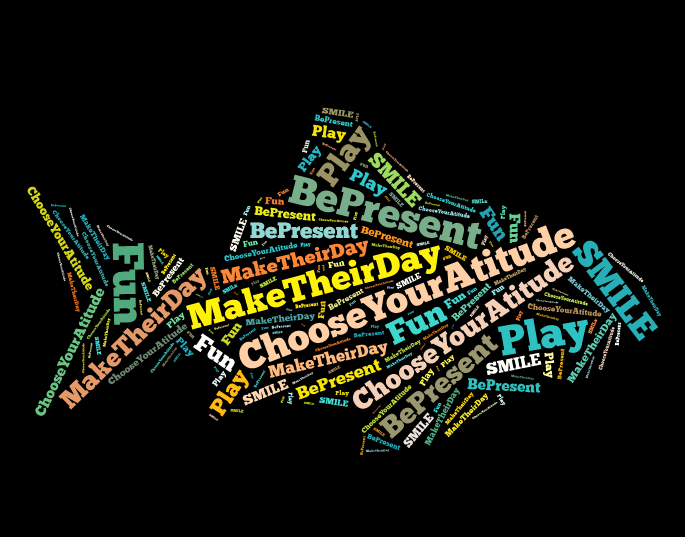
  • Take care of yourself.  I don’t know how you find ways to care for yourself.  Personally, I know there are times I need laughter, and I need to do something completely away from school. More often, I simply need to remind myself of another of our family sayings: “You get what you get, and you don’t throw a fit.”  It is a way of telling myself, “This is the world we live in.  It has lots of good, but sometimes it stinks.  Get over it, and do the best you can.”  For a while, we heard a lot of hype about the Seattle Fish Market and the FISH Philosophy.  I don’t remember all the details, but I do know one part was Choose Your Attitude.  I believe this to be true: We do have control of our attitude.  Some days I need to choose more consciously and more wisely.  If this doesn't work for you, I hope you find an approach that does.


The bottom line is that high-stakes testing in Indiana is in disarray.  Another reality is that as educators we are not independent contractors.  We are paid to do the best job we can and follow the guidelines coming to us—even when they are confusing or even contradictory.  So we will do that, and we will do it professionally and thoughtfully.  While we are at it, we will also take care of our students, take care of each other, and take care of ourselves because at HSE and across the state, we are educators.  And this is what we do.

Keep fighting the good fight, HSE. 


Phil

Friday, February 6, 2015

New Tricks

Several weeks ago, the title of my memo was “How Do You Know?”  It was about the difference between learning declarative and procedural knowledge.  Specifically, it was about what we were doing with our professional development time as we prepare for next year’s BYOD initiative and continue to work on the HSE21 Best Practice Model.
In response to that email, Kathy Sherman hit “reply” and responded.  I have her permission to share parts of our correspondence.  Many of you know and love Kathy.  For those of you who don’t, Kathy has been at HSE for a little while.  She has seen the school morph from a small rural school in the bucolic Hamilton County countryside to becoming one of the largest schools in the state, situated in one of the fastest growing communities in the nation.  Kathy is our World Language Department chair, and I think it is safe to say, she doesn’t consider herself to be technologically savvy.
That is part of the reason I enjoyed her emails so much, and I thought you might as well.  Here, in part, is our email conversation:
From: Sherman, Kathy
Sent: Sunday, February 01, 2015 7:15 PM
To: Lederach, Philip
Subject: Re: From B106: How Do You Know?

I worked with my 3 Honors classes On Google Docs. They are turning in a project using Google Docs for Tuesday. They understand that it is a new learning for me and we are working on this together. I will let you know how it goes….


From: Lederach, Philip
Sent: Sunday, February 01, 2015 7:22 PM
To: Sherman, Kathy
Subject: Re: From B106: How Do You Know?

Who is this and how did you get into Kathy Sherman's email? J

Can't wait to hear how they did.  You made my day, Kathy!

Sent from my iPhone

From: Sherman, Kathy
Sent: Tuesday, February 03, 2015 2:22 PM
To: Lederach, Philip
Subject: RE: From B106: How Do You Know?

Did you feel the earth shake during 4th or 6th period today?

I am feeling pretty good with this Google Docs thing.  My 4th period helped me maneuver around some of the finer points—making the picture larger, backing out of one presentation to another, etc.  But almost all students turned in the presentation via Google Docs—only a couple of glitches. 

I have been able to make comments about the presentations and return them to students. 

I know I will try it again.—maybe even with my 1st year kids.  “No se aventura, no gana el mar (Nothing ventured nothing gained!)”

I feel like I have gained a bit of technology savvy today! 

This is a great example of how learning actually happens.  It doesn’t take place all at once, but it certainly involves taking risks and moving out of our comfort zones.  It is what we ask students to do all of the time, and, just like Kathy, it is also what we need to model. 

Photo from Glenn Hervieaux

Kathy sent one more email reflecting on her experience:

After hearing the “glories of Google Docs” touted to me like words from a preacher in a revival tent, I decided to brush away the black cloud of technology that hangs over my head.  With the help of several department members (especially Liz Rose), I sought the help of my Spanish 3 Honors students to develop a project using Google Docs with their HSE Google accounts.  We spent part of one period just making sure everyone had their HSE Google ID.  I asked some students to try and send me some practice files, and we set up a folder for the class.  I am sure these seem like super simple steps for many, but….

On the day the project was due, all but one student was able to send me their projects—no paper involved!  I was able to pull up each student’s report quickly, project the picture on the screen and listen to the presentation while I followed along the written copy they had included in their Google file!  No one had to give me flash drive, take time to go to Blackboard, search my e-mail, etc. 

I know this was a small step, but the success I experienced makes me want to try again.  I may even tackle an assignment with my Spanish I students.  An old dog can learn new tricks! 

Kathy, there are many good reasons you are loved by so many students and staff at HSE.  You are a rock solid teacher, you constantly give the gift of humor and laughter, and now you show us the importance of continual learning.  Gracias por todo lo que hace usted.

Have a great week, HSE.  Thanks for all you do.

Phil

“Learning makes you to stay forever young.  Commit yourself to lifelong learning.” 

--Lailah Gifty Akita, Ghanaian teacher, scientist, and philosopher

Friday, January 30, 2015

How Do You Know?

Several Fridays ago, along with the rest of you, I went from session to session learning about Google Drive, Google Accounts, Blackboard, Digital Content, and Digital Citizenship.  My observation during that day is that most of us fall somewhere on the continuum between being overwhelmed by all of the new information to wishing we would get past the basics and spend much more time on how to best apply this knowledge in the classroom.

When we learn about these topics, we are learning both what they are and how to use them, and that makes for very different learning experiences.  The educational terms used to describe the two different types of learning are Declarative Knowledge and Procedural Knowledge.  When we learn new vocabulary, facts, places, names, events, or titles, we are learning Declarative Knowledge.  Procedural Knowledge is about the skills and includes the psychomotor process of putting knowledge into action. Obviously, these are not entirely separate, but this might be a helpful way to think about our experience during the last half-day professional development—and about what happens with students in your classrooms.

From Sheila Pontis "Mapping Complex Information"
Robert Marzano gives this short description of how each type of knowledge is learned:

Learning Declarative Knowledge:
  1. Construct Meaning: Students link information to prior knowledge.
  2. Organize the Information: Students are able to see patterns in the information.
  3. Store: Students store information in long-term memory.

Learning Procedural Knowledge:
  1. Learn the Steps: Students learn the process, but it is just information.
  2. Shape and Adapt: Students deepen understanding through practice and take ownership of the process.
  3. Internalize: Students practice to the point of automaticity or fluency.

This might help make sense of where you came out on the continuum last Friday.  If you were unfamiliar with one or more of the topics, you may be somewhere in the steps of learning Declarative Knowledge.  You are asking questions like these:
  • What is Google Drive?
  • What is the difference between a Doc and a Sheet?
  • What can students do with Google Drive?

If you are already somewhat familiar with these topics, you might be working on learning Procedural Knowledge.  Your questions might be these:
  • How do I create a group mailing list for Google Drive?
  • How can I use Google Forms to create a formative assessment?
  • How can I use Google Drive to improve student collaboration?

The good news, regardless of where you fall on the continuum, is that repetition does make a difference.  Best practice instruction for students (and for us) is to cycle back into a new topic soon and often.  To move Declarative Knowledge into long term memory, students need to return to the concept and do something new with it, so they can make it their own.  To move Procedural Knowledge into automaticity takes practice.  The most effective kind of practice is not a one-time shot but rather distributed over time.

From Goalsblogger
Use it or lose it.

Regardless of your level of understanding, this truism applies.  It’s the way our brains function.  It is how we make meaning and how we improve our skills.  It is how we learn.

Fortunately for us, the professional development calendar works in our favor this year.  February 6 will provide another half-day to work on our knowledge and skills.  Our goal is to differentiate for those of you working on the Declarative Knowledge and those of you working on Procedural Knowledge.

In the meantime, the more often you and your students dive into Google Drive, Google Accounts, or Blackboard, the better your chance of moving your learning forward.  You will be making lots of choices about content and activities for your class in the coming days, weeks, and months.  When you have the option, opt as often as possible for one of the strategies you learned several weeks ago and will learn this coming Friday.

I know you will find these tools will help your students.  Even using these skills a little, will help you prepare for next fall as well.

I hope your week is a great one.


Phil

Source Unknown